

Heat Wave Horrors
On 2666 and the case for staying with feel-bad literature/movies.
This began as a “what I’m reading” post and soon spiraled out of control.
♦️ MENTIONED: Roberto Bolaño’s 2666; Netflix’s Maternal Instinct; Conor Hultman’s conceptual poetry collection DOE (reviewed by David Porter); Kiyoshi Kurosawa’s film Cure; James Baldwin’s play Blues For Mister Charlie; Nathalie Leger’s The White Dress.
I STARTED ROBERTO BOLANO’S 2666 on a flight to San Francisco. I had been eyeing the novel—or rather, the three-volume box set that makes up the novel—for almost two years now. It sits on an eye-level shelf by the front door of my boyfriend’s apartment. Although I notice it every time I put on my shoes, it wasn’t until last month that I felt compelled to pick it up. I have about 150 (out of 900) pages left, and I’m still not sure how quickly I want to finish it.
Even so, I am certain that 2666 is the most terrifying book I’ve ever read. It’s not a horror novel, which has a plot designed to provoke fear. Rather, Bolaño’s sprawling epic begins with a purposeful detour. Violence is initially kept at an arm’s length, existing in the periphery of the characters’ lives, occasionally emerging during, say, a drunken quibble with a cabbie. Only after 300 pages are the horrors made explicit, accumulating and inundating the novel’s reality. This narrative choice feels true to how we, as a society, process and respond to systemic violence. The book’s epigraph is a line from Baudelaire (“An oasis of horror in a desert of boredom”) that I keep quoting for no good reason, probably because it reminds me of the meme: “The horrors persist, but so do I.”

2666 comprises five interrelated sections, which Bolaño originally intended to publish as separate books. The first part centers on a group of European academics searching for an elusive German author. Their mission takes them to Santa Teresa, a poverty-ridden Mexican border town modeled after the real Ciudad Juárez, where hundreds of women and girls have been murdered since 1993. (The novel draws from the investigative work of journalist Sergio González Rodríguez into the Juárez femicides.) The second and third sections introduce two new characters in Santa Teresa, a philosophy professor named Amalfitano and a Black American sports reporter named Oscar Fate. Both men are transplants to the crime-filled town, and through their perspectives, we intuit the palpable sense of danger and evil emanating from the desert. Amalfitano, who begins hearing a voice in his head, grows restless and paranoid, while Fate, who is there to cover a boxing match, finds himself drawn to Santa Teresa’s rough-and-tumble crowd.

The fourth section, ominously titled “The Part About The Crimes,” begins with a description of a dead woman’s body. The gruesome attention to detail is off-putting and difficult to stomach, though, at this point, I was too locked into the novel’s world to doubt its necessity. Finally, I thought, a trace of what seems to be a detective story or a police procedural—a genre that contains a promise of deliverance. I foolishly grasped onto the hope (yes, hope!) that there would be some kind of resolution or explanation to these inexplicable evils, all revealed with bureaucratic detachment. A dead woman here, a dead woman there. Strangled and raped, or shot. Occasionally, a dead girl. One of the Book Club Bar bartenders advised me to finish the section as quickly as I can, without hesitation. “It will be worth it,” he said. It still took me about three weeks.
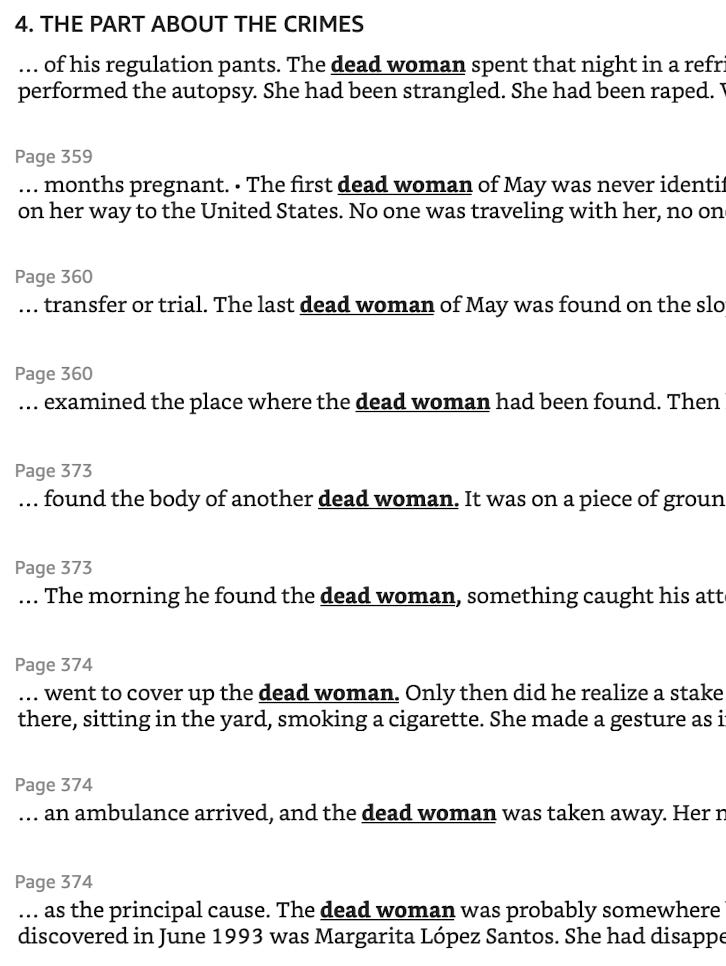
WHAT MAKES 2666 SO TERRIFYING is how it cultivates your tolerance for violence; it reframes what you once thought was unbearable, stalling you into hopelessness, the same hopelessness that befalls the town’s residents, the victim’s families, the reporters, even the detectives working on the cases. By the time you encounter the twentieth dead woman, you begin to understand how nothing can be done, how easily “we’ve gotten used to death,” as one resident says to another, who responds: “It’s always been that way. Always.”
While a few cases are solved, hundreds “remained unsolved” or “remained open and was soon forgotten” as new victims are found. Here, Bolaño’s prose becomes stripped of feeling and subjectivity, which strikes me as a stylistic rejection of what most commercial fiction seeks to accomplish—to make the world more beautiful and bearable for readers, as they grow enamored with (or are comforted by) the author’s free-wheeling imagination.
I have never been an eager consumer of true crime for how it flattens and sensationalizes tragedy into a matter of lurid intrigue. (I am not proud to have recently seen Netflix’s Maternal Instinct, which reduces a young expectant mother’s untimely death into an hour’s worth of entertainment.) I suppose one can leverage similar complaints against Bolaño; some readers find the novel to be a letdown—too violent, too meandering. What exactly is the point of introducing us to a ballooning cast of suspects and bystanders, of zeroing in on the the bone-chilling details of hundreds of murders, if there is no clear motive behind all this senseless pain and suffering, except perhaps the sick enjoyment of pain and suffering itself. The point was to replicate the conditions of “purgatory, a long, helpless wait, a wait that begins and ends in neglect, a very Latin American experience” that plagued the residents of Santa Teresa, a purgatory that Bolaño knew would baffle and frustrate non-LatAm readers.
Throughout, the number 2666 remains “an ominous mystery,” and yet it conveys a sense of “empty totality,” a phrase I’m borrowing from David C. Porter’s incisive review of Conor Hultman’s DOE, a conceptual poetry collection that, much like “The Part About The Crimes,” functions as a stony monument to the dead, the authorial voice speaking in an expressionless autopsical “register of a police report addressed directly to God.” At the risk of quoting Simone Weil, I believe there is something sacred in the attention we choose to give others, whether dead or alive. And I’m of the view that Bolaño, who obsessively researched the Júarez femicides while he was dying, tried to give each victim her due, in giving us as much information that can possibly be known about her at and following the time of death.
I should really finish 2666 before I say any more about it, but while writing this essay (?), I realized that my reading list for the past six months has been plagued with feel-bad literature and films. I don’t know what that says about me and my psyche. I guess I’m trying to understand how beauty and divine can co-exist with the terrible, and whether I can make something true that gets at this condition, if I can ever, to quote Ariana Reines, “write a true word, something true enough to really satisfy me.”


IN FEBRUARY, MY FRIEND Matthew Ritchie gave me a copy of James Baldwin's 1964 play “Blues for Mister Charlie” on the same night we went to see Kurosawa’s 1997 horror film Cure. He also handed me Nathalie Leger’s 2020 book-length essay The White Dress, which I mailed to him for temporary safekeeping while I was in California. I’m definitely a naive cinephile because I did not realize Cure was a horror movie. It follows a Japanese detective investigating a series of identical murders committed by perpetrators who’ve been seemingly hypnotized. Google had described it as “an atmospheric crime film and part philosophical meditation” so I felt assured of my ability to handle it. I “handled” it, in the sense that I finished the movie, but I left the theater profoundly shaken.
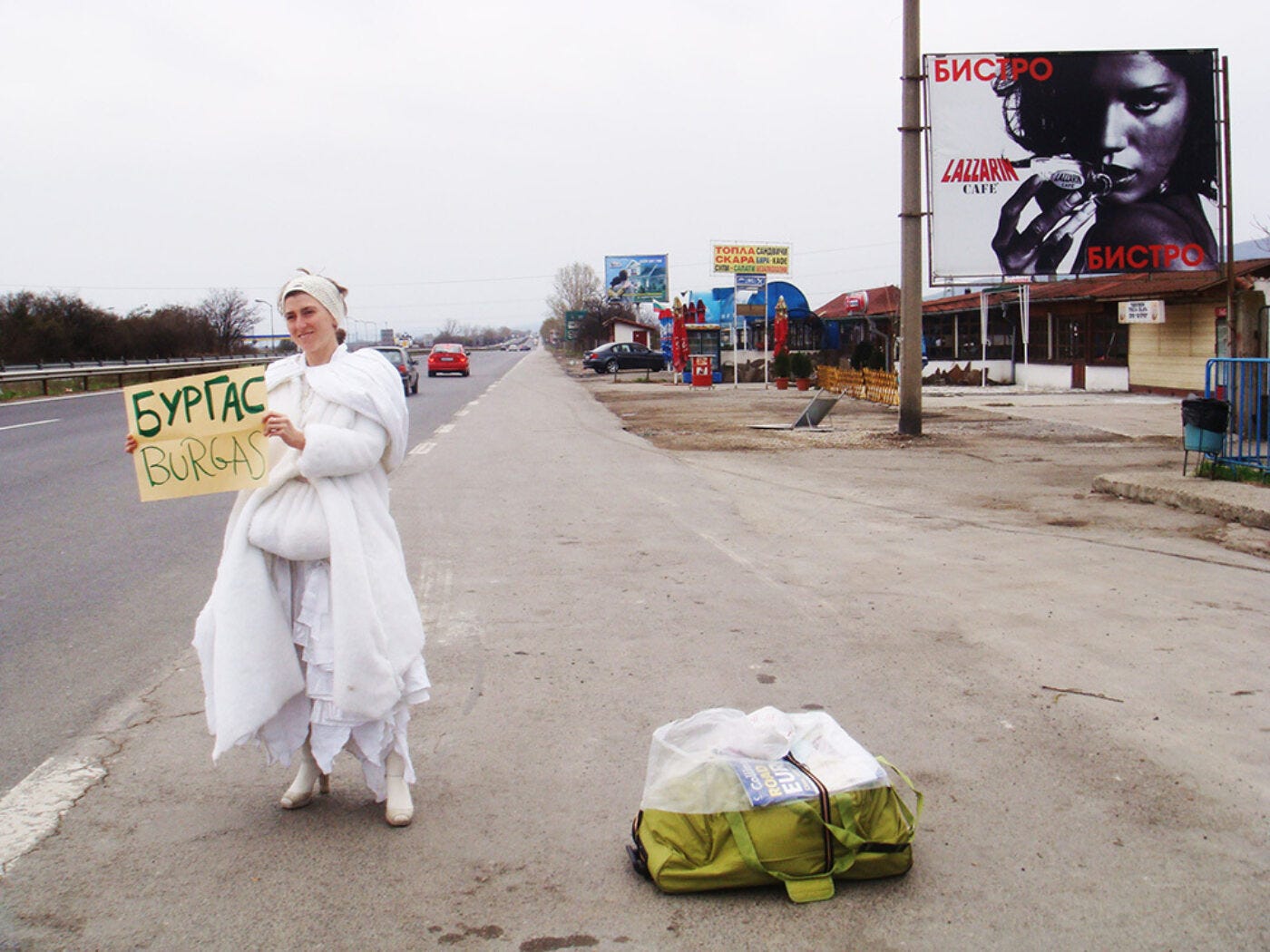
I couldn’t shake the feeling for weeks. Maybe because I finished “Blues” and The White Dress shortly afterwards, two works that also offer an unflinching assessment of—and are unflinchingly obsessed with—murder. Baldwin’s “Blues” is about the murder of a black man by a white convenience store owner, and The White Dress is Leger’s meditation on the 2008 murder of Pippa Bacca, an Italian performance artist who hitchhiked across Europe in a white dress to promote a message of peace.
These works, like 2666, acknowledge the potential for great harm and suffering that resides within each and every one of us; they recognize the gruesome potential that is enabled or enacted by the rotten society that we live in, albeit through a slightly different lens. Baldwin attempts to speak on behalf of both the oppressed and the oppressor through his play’s polyphonic forms; Kurosawa reveals to us Japanese society’s morally rotten core, a parasitic rottenness that lurks beneath the polite pretenses of social norms; and Leger ruminates on the idealistic provocations of Bacca’s performance, the knowing dangers she put herself in the path of.
Leger imagines that, for Bacca, the essence of the performance was rooted in an idealistic cloud of goodness, so moved was she by “the urge to repair, the desire to spread goodness, not goodness itself, but the idea of goodness…” But it was not her goodness and naïveté that compelled Leger, but the fact that Bacca wanted “to mend something that was out of all proportion, and that she did not make it.” The fact that Bacca was strangled and raped—like the women and girls in 2666—during the third week of her journey consecrated her artistic intent for Leger, who believed that Bacca’s death imbued her actions with something true, something undeniable.
In the introduction to “Blues,” Baldwin wrote that he feared he “would never be able to draw a valid portrait of the murderer,” a man like Roy Bryant, who kidnapped and murdered 14-year-old Emmett Till, whose death in part provoked Baldwin to write the play. “I am aware that no man is a villain in his own eyes,” Baldwin writes in the introduction. “Something in the man knows—must know—that what he is doing is evil; but in order to accept the knowledge man would have to change.” In Cure, the psychology student responsible for the murders, Mamiya, tells the detective that he cannot alter the morals of the person he is hypnotizing. He cannot make his victims do what they don’t truly believe in. Whether true or not (the source of Mamiya’s supernatural powers are never fully explained to the viewer), this admission is meant to unsettle us.
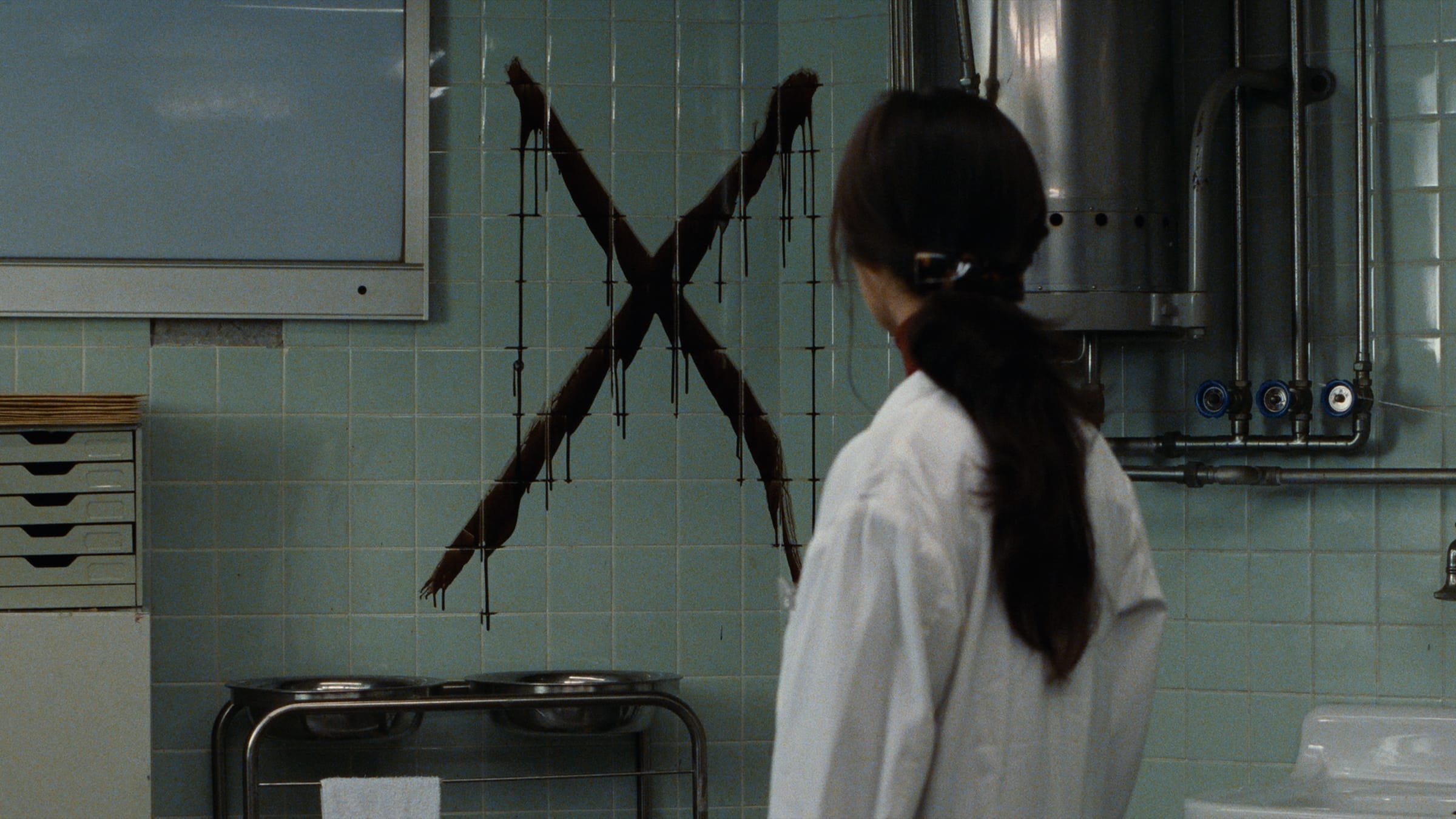
Cure concludes on a provocation that, deep down, every single person is capable of evil, or rather, they are capable of being infected by evil. There’s no ideology to Mamiya, no apparent malice. He is a cypher, bereft of both memory and conscience, of soul and subjectivity. His choice of perpetrators and victims seems entirely arbitrary, and his motives remain obscure to the point of unknowability. He spreads evil like a contagion. There is no equivalent figure in 2666, although the Santa Teresa police tried to pin it on a German video store owner. The men in the town felt entitled to kill, simple as that, much like the murderer in “Blues.”
I don’t want make this essay any longer, but I keep returning to Leger’s statement about the world being out of proportion, off-kilter in some way. I’m sure we all are aware of this, to a certain extent, in the way that animals are attuned to natural disasters. It’s alarming when thought about too often, which is why reading 2666 feels like an exercise in psychological endurance. The closest thing I have to a personal philosophy is the belief that the world is governed by chaos/eros, and although these forces can be contained, balanced, or offset in many ways, what’s ungovernable occasionally rears its head and makes itself known in frightening, cruel, and unusual ways. I want Bolaño to lead me towards something that approximates an answer, a road out of the so-called “oasis of horror,” but given how he died while writing 2666, I suspect we’re meant to be stuck in his purgatory.
Thank you for reading VAGUE BLUE! As always, the newsletter remains an experimental space for me to free-associate on art, literature, media, and theory that I have recently encountered and enjoyed. The latter half of this essay was originally drafted in a March email to my dear friend Ricardo Montero.

cheers to big book summer! in a similar vein, for the last few years i've been doing this thing i've been calling "big book august" where i only i read giant novels. i read 2666 a few augusts ago in the course of a few hazy days and fell deeply in love with it. i've re-read certain passages about the relationship between hans & the baronness enough times that the words are permanently seared in my brain.
Don’t know if I can stomach reading 2666 after your apt description of psychological alteration in reading it - the Baldwin quote ties it all together. Thank you for writing!